The Alpha Hydroxybutyrate Dehydrogenase (α-HBDH) test measures the level of the enzyme α-HBDH, which helps assess tissue damage, especially in the heart, liver and muscles.
Report in Report 72 Hours
No fasting needed
Home collection
1 parameter
What the ALPHA HYDROXYBUTYRATE DEHYDROGENASE checks
ALPHA HYDROXYBUTYRATE DEHYDROGENASE
How to prepare
No fasting is needed. Drink water as usual and tell the phlebotomist about any medicines you take.
Unsure about your report values? Use our report checker — and always discuss results with your doctor.
ALPHA HYDROXYBUTYRATE DEHYDROGENASE – FAQs
What is the price of ALPHA HYDROXYBUTYRATE DEHYDROGENASE?
The ALPHA HYDROXYBUTYRATE DEHYDROGENASE costs ₹235 with home sample collection. Home collection charges, if any, are shown before you confirm the booking.
Is fasting required for ALPHA HYDROXYBUTYRATE DEHYDROGENASE?
No fasting is needed for this test. You can give the sample at any time of the day.
When will I get the ALPHA HYDROXYBUTYRATE DEHYDROGENASE report?
The report usually comes in Report 72 Hours after the sample reaches the lab. It is sent on WhatsApp and email.
Can I give the sample for ALPHA HYDROXYBUTYRATE DEHYDROGENASE at home?
Yes. A trained phlebotomist visits your home with a sealed kit at the slot you choose. Enter your pincode while booking to check home collection in your area.
What does the ALPHA HYDROXYBUTYRATE DEHYDROGENASE include?
It checks 1 parameter: ALPHA HYDROXYBUTYRATE DEHYDROGENASE.
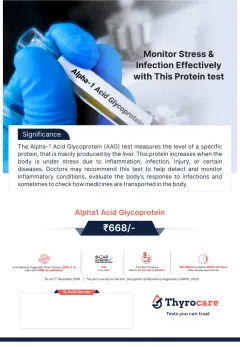
The Alpha-1 Acid Glycoprotein (AAG) test measures the level of a specific protein, that is mainly produced by the liver. This protein increases when the body is under stress due to inflammation, infection, injury, or certain diseases. Doctors may recommen
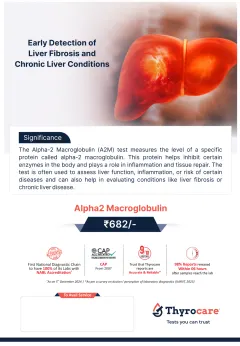
The Alpha-2 Macroglobulin (A2M) test measures the level of a specific protein called alpha-2 macroglobulin. This protein helps inhibit certain enzymes in the body and plays a role in inflammation and tissue repair. The test is often used to assess liver f
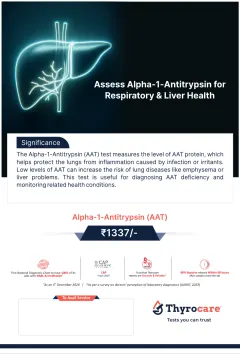
The Alpha-1-Antitrypsin (AAT) test measures the level of AAT protein, which helps protect the lungs from inflammation caused by infection or irritants. Low levels of AAT can increase the risk of lung diseases like emphysema or liver problems.