The Apolipoprotein Ratio test measures the balance between two key proteins—Apolipoprotein B (ApoB) and Apolipoprotein A1 (ApoA1)—that carry cholesterol in your blood.
Report in Same day
No fasting needed
Home collection
3 parameters
What the APOLIPROTEIN RATIO checks
APO B / APO A1 RATIO (APO B/A1)
APOLIPOPROTEIN - A1 (APO-A1)
APOLIPOPROTEIN - B (APO-B)
How to prepare
No fasting is needed. Drink water as usual and tell the phlebotomist about any medicines you take.
Unsure about your report values? Use our report checker — and always discuss results with your doctor.
APOLIPROTEIN RATIO – FAQs
What is the price of APOLIPROTEIN RATIO?
The APOLIPROTEIN RATIO costs ₹995 with home sample collection. Home collection charges, if any, are shown before you confirm the booking.
Is fasting required for APOLIPROTEIN RATIO?
No fasting is needed for this test. You can give the sample at any time of the day.
When will I get the APOLIPROTEIN RATIO report?
The report usually comes in Same day after the sample reaches the lab. It is sent on WhatsApp and email.
Can I give the sample for APOLIPROTEIN RATIO at home?
Yes. A trained phlebotomist visits your home with a sealed kit at the slot you choose. Enter your pincode while booking to check home collection in your area.
What does the APOLIPROTEIN RATIO include?
It checks 3 parameters: APO B / APO A1 RATIO (APO B/A1), APOLIPOPROTEIN - A1 (APO-A1), APOLIPOPROTEIN - B (APO-B).
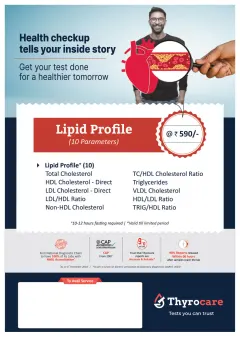
Lipid Profile measures different types of fats (lipids) in the body, including Total Cholesterol, HDL (good cholesterol), LDL (bad cholesterol), Triglycerides and related lipid ratios.
This test measures the amount of cholesterol and fats in your body. It can help determine if your cholesterol is high or low and if you are at a risk of developing any heart-related conditions.
The HDL Cholesterol – Direct Test measures the level of high-density lipoprotein (HDL) cholesterol. HDL is often called “good cholesterol” because it helps remove excess cholesterol from the bloodstream, reducing the risk of heart disease.
A Triglycerides test measures the level of triglycerides in the blood. In the body, Triglycerides are a form of fat. The Triglycerides test determines the risk of heart disease and tracks the success of lipid-lowering medication.
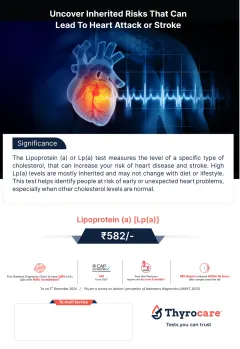
The Lipoprotein (a) or Lp(a) test measures the level of a specific type of cholesterol, that can increase your risk of heart disease and stroke. High Lp(a) levels are mostly inherited and may not change with diet or lifestyle.