
C-PEPTIDE
C Peptide test gives clarity between insulin secreted by the body and insulin injected into the body in Diabetic patients. C-peptide has a half-life of 30 minutes and tends to stay in the body longer than insulin.
- Report in Next Day
- 10–12 hr fasting
- Home collection
- 1 parameter
What the C-PEPTIDE checks
- C-PEPTIDE
How to prepare
Do not eat for 10–12 hours before the sample. Water is fine. Take your regular medicines unless your doctor says otherwise, and book an early-morning slot.
Unsure about your report values? Use our report checker — and always discuss results with your doctor.
C-PEPTIDE – FAQs
What is the price of C-PEPTIDE?
The C-PEPTIDE costs ₹1,235 with home sample collection. Home collection charges, if any, are shown before you confirm the booking.
Is fasting required for C-PEPTIDE?
Yes. Please do not eat for 10–12 hours before the sample (water is fine). We suggest an early-morning slot.
When will I get the C-PEPTIDE report?
The report usually comes in Next Day after the sample reaches the lab. It is sent on WhatsApp and email.
Can I give the sample for C-PEPTIDE at home?
Yes. A trained phlebotomist visits your home with a sealed kit at the slot you choose. Enter your pincode while booking to check home collection in your area.
What does the C-PEPTIDE include?
It checks 1 parameter: C-PEPTIDE.
Related tests
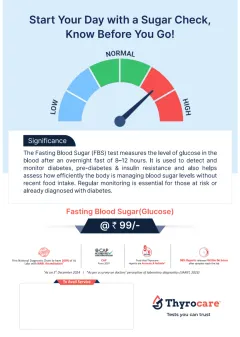
Fasting Blood Sugar (FBS) Test
The Fasting Blood Sugar (FBS) test measures the level of glucose in the blood after an overnight fast of 8–12 hours.
Includes: Fasting Blood Glucose
₹80
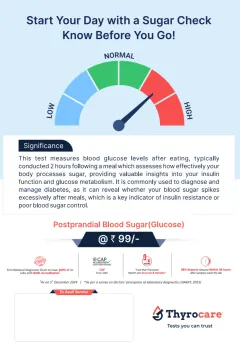
Postprandial Blood Sugar (PPBS) Test
This test measures blood glucose levels after eating, typically conducted 2 hours following a meal which assesses how effectively your body processes sugar, providing valuable insights into your insulin function and glucose metabolism.
Includes: Postprandial Blood Glucose (PPBS)
₹90
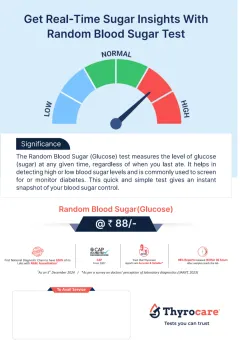
Random Blood Sugar (RBS) Test
The Random Blood Sugar (Glucose) test measures the level of glucose (sugar) at any given time, regardless of when you last ate. It helps in detecting high or low blood sugar levels and is commonly used to screen for or monitor diabetes.
Includes: Random Blood Glucose (RBS)
₹85
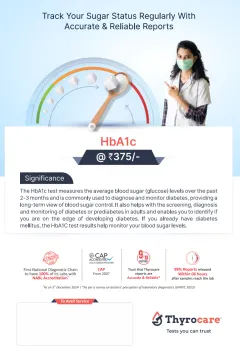
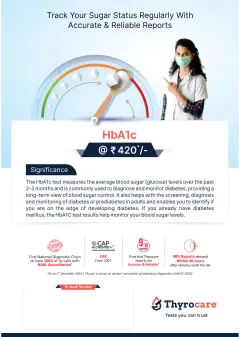
HbA1c Test – Average Blood Sugar Test
HbA1c test, also known as glycated hemoglobin test, measures average blood glucose levels. It provides an overview of long-term blood sugar control, essential for diagnosing and managing diabetes.
Includes: Glycated Hemoglobin (HbA1c)
₹420
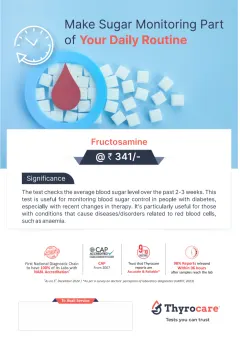
FRUCTOSAMINE
The test checks the average blood sugar level over the past 2-3 weeks. This test is useful for monitoring blood sugar control in people with diabetes, especially with recent changes in therapy.
Includes: FRUCTOSAMINE
₹350