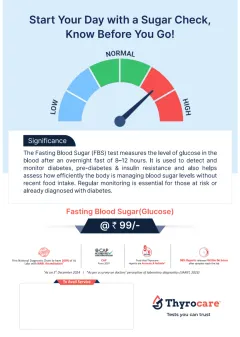
Fasting Blood Sugar (FBS) Test
The Fasting Blood Sugar (FBS) test measures the level of glucose in the blood after an overnight fast of 8–12 hours.
Includes: Fasting Blood Glucose
₹80
No fasting is needed. Drink water as usual and tell the phlebotomist about any medicines you take.
Unsure about your report values? Use our report checker — and always discuss results with your doctor.
The TIN costs ₹1,205 with home sample collection. Home collection charges, if any, are shown before you confirm the booking.
No fasting is needed for this test. You can give the sample at any time of the day.
The report usually comes in 24–48 hours after the sample reaches the lab. It is sent on WhatsApp and email.
Yes. A trained phlebotomist visits your home with a sealed kit at the slot you choose. Enter your pincode while booking to check home collection in your area.
The Fasting Blood Sugar (FBS) test measures the level of glucose in the blood after an overnight fast of 8–12 hours.
Includes: Fasting Blood Glucose
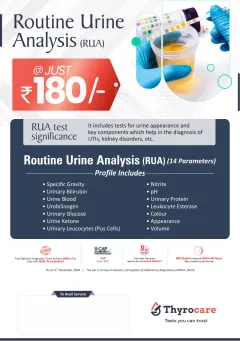
Routine urine analysis (urinalysis) is a common diagnostic test used to assess the general health of the urinary system and detect a wide range of disorders, such as urinary tract infections (UTIs), kidney disease and diabetes.
Includes: SPECIFIC GRAVITY, APPEARANCE, URINARY BILIRUBIN, URINE BLOOD, UROBILINOGEN, COLOUR, URINARY GLUCOSE, URINE KETONE, LEUCOCYTE ESTERASE, URINARY LEUCOCYTES (PUS CELLS), NITRITE, PH, URINARY PROTEIN, VOLUME
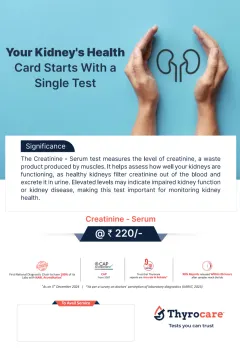
The Creatinine - Serum test measures the level of creatinine, a waste product produced by muscles. It helps assess how well your kidneys are functioning, as healthy kidneys filter creatinine out of the blood and excrete it in urine.
Includes: CREATININE - SERUM

This test is performed for newborns to check how well the baby’s thyroid gland is working. It measures the level of TSH to detect conditions like congenital hypothyroidism (an underactive thyroid present at birth).
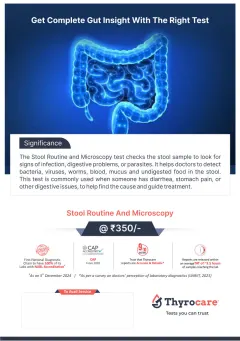
The Stool Routine and Microscopy test checks the stool sample to look for signs of infection, digestive problems, or parasites. It helps doctors to detect bacteria, viruses, worms, blood, mucus and undigested food in the stool.