Home sample collection across India Mon – Sun: 7:00 AM – 10:00 PM +91 82878 28253

Bilirubin normal range: total, direct and indirect explained

Bilirubin is a yellow substance made when old red blood cells break down. The liver processes it and sends it out of the body through bile and stools. If too much bilirubin is made, or the liver or bile ducts cannot clear it properly, the level in the blood rises. When it rises enough, the eyes and skin can turn yellow, which is called jaundice. Bilirubin is part of every liver function test and is checked when someone has yellow eyes, dark urine, liver problems or during a routine checkup.

हिंदी में पढ़ें

Bilirubin – Normal range chart

LevelValue (mg/dL)
Total bilirubin (adults)Labs varyAbout 0.3 – 1.2 mg/dL
Direct (conjugated)Some labs use up to 0.2 – 0.4Up to about 0.3 mg/dL
Indirect (unconjugated)Usually total minus directAbout 0.2 – 0.9 mg/dL
Yellow eyes usually seenVaries from person to personOften above about 2.5 – 3 mg/dL
Newborn babiesThe child specialist decidesVery different from adults

Ranges differ a little from lab to lab.

What does my result mean?

Bilirubin Bilirubin 1.5 mg/dL

This is slightly above the usual range. It is often harmless, for example after fasting or in a common inherited condition called Gilbert syndrome, but your doctor should look at it with your other liver values.

Bilirubin Bilirubin 2 mg/dL

This is mildly high and the eyes may start to look slightly yellow. Show your report to a doctor, who will check whether the direct or indirect part is raised.

Bilirubin Bilirubin 3 mg/dL

At this level, yellowing of the eyes is often visible. Please see a doctor soon to find the cause, which may be in the liver, bile ducts or blood.

What this test checks

The test measures bilirubin in the blood in mg/dL. Total bilirubin is often split into direct (conjugated, already processed by the liver) and indirect (not yet processed). This split helps the doctor understand where the problem may be. It is advised for anyone with yellow eyes or skin, dark urine, liver disease, gallbladder problems or some blood disorders. Newborn babies are checked separately, and their ranges are very different from adults.

Common reasons for a high value

  • Viral hepatitis or other liver inflammation
  • Gilbert syndrome, a common and usually harmless inherited condition
  • Blockage of the bile duct, for example by gallstones
  • Fast breakdown of red blood cells (haemolysis)
  • Alcohol-related liver disease or some medicines
  • Long fasting can raise it slightly in some people

How to prepare

Many labs suggest 8–10 hours of fasting before a liver function test; plain water is fine. Avoid alcohol for a day before the test. Keep taking your regular medicines unless your doctor tells you otherwise, and tell the doctor about any medicines or herbal products you take.

When to see a doctor

See a doctor if your bilirubin is above the range printed on your report, or if you notice yellow eyes or skin, dark urine or pale stools. Go to a hospital immediately if yellow eyes come with confusion, extreme sleepiness, vomiting blood, high fever with chills or severe belly pain. For newborn babies with yellow skin, contact the child specialist the same day.

Bilirubin – FAQs

What is the normal bilirubin level in adults?

Total bilirubin is usually about 0.3–1.2 mg/dL and direct bilirubin up to about 0.3 mg/dL. Labs set slightly different limits, so the range printed on your own report is the one that applies.

What is the difference between direct and indirect bilirubin?

Indirect bilirubin is the form made from old red blood cells before the liver processes it. Direct bilirubin is the processed form. Which part is raised helps the doctor understand whether the issue is in the blood, the liver or the bile ducts.

Is slightly high bilirubin dangerous?

Not always. A mild rise of indirect bilirubin with normal liver enzymes is often due to Gilbert syndrome, which is usually harmless. Still, only a doctor can decide this after looking at your full report and history.

Can the bilirubin test be done at home?

Yes. Bilirubin is part of the liver function test. The blood sample is collected at your home, tested at a partner lab, and the report is shared on WhatsApp and email.

This page is general information, not medical advice. The normal range printed on your own report is the one that applies, and only a doctor can tell what your result means for you.

Packages with this test

All packages
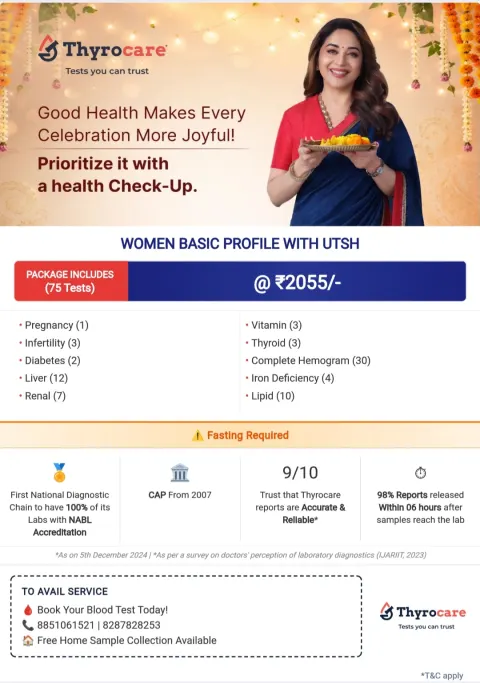
WOMEN BASIC PROFILE WITH UTSH package details

WOMEN BASIC PROFILE WITH UTSH

75 tests included · Report in 24–48 hours
  • PREGNANCY (1 TEST)
  • FOLATE
  • THYROID ( 2 TEST)
  • DIABETES (2 TEST)
  • + 7 more
₹3,760 ₹2,055 45% OFF
You save ₹1,705
Book Now
Ask on WhatsApp
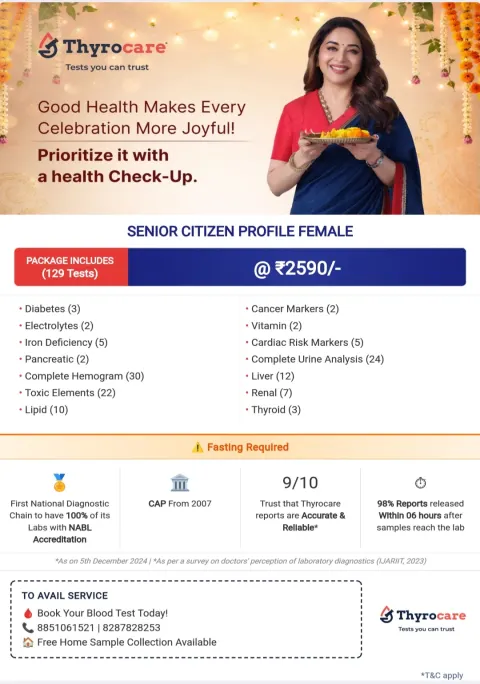
SENIOR CITIZEN PROFILE FEMALE package details

SENIOR CITIZEN PROFILE FEMALE

129 tests included · Report in Same day
  • DIABETES (3 TEST)
  • CANCER MARKER (2 TEST)
  • ELECTROLYTES (2) test
  • Vitamin (2 TEST)
  • + 10 more
₹5,099 ₹2,590 49% OFF
You save ₹2,509
Book Now
Ask on WhatsApp
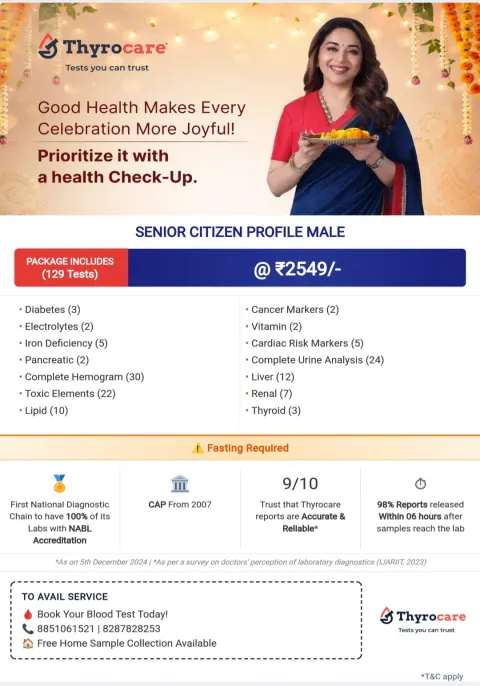
SENIOR CITIZEN PROFILE MALE package details

SENIOR CITIZEN PROFILE MALE

129 tests included · Report in 24 Hours
  • DIABETES (3 TEST)
  • CANCER MARKER ( 2 TEST)
  • ELECTROLYTES (2) test
  • Vitamin (2 TEST)
  • + 10 more
₹5,099 ₹2,549 50% OFF
You save ₹2,550
Book Now
Ask on WhatsApp
AAROGYAM A PRO - PACKAGE package details

AAROGYAM A PRO - PACKAGE

12 tests included · Report in 24–48 hours
  • TOTAL CHOLESTEROL
  • TRIGLYCERIDES
  • BILIRUBIN - TOTAL
  • SGOT / SGPT RATIO
  • + 8 more
₹999
Book Now
Ask on WhatsApp

Not sure which test you need?

Share your mobile number — our team will call you with the right tests, today's best price and a home-collection slot.

Please enter a valid 10-digit mobile number.
Please enter your city.

No spam. Your number is used only to help you book. Privacy

+91 82878 28253