CRP normal range: what your C-reactive protein result means
C-reactive protein (CRP) is a protein made by the liver. Its level in the blood goes up quickly when there is infection or inflammation in the body, often within hours, and comes down as the problem settles. Doctors check CRP for fever, suspected infection, joint pain and to see how well treatment is working. A more sensitive version, called hs-CRP, measures very small amounts and is used along with cholesterol tests to understand heart risk. Like ESR, CRP shows that inflammation is present but does not tell the exact cause.
hs-CRP – higher heart riskRepeat test is often advised
Above 3 mg/L
Ranges differ a little from lab to lab.
What does my result mean?
CRP 10
Mildly raised. It can be seen with a minor infection, injury or other inflammation. Your doctor will decide if it needs more tests or a repeat check.
CRP 50
Clearly raised. It usually means active infection or inflammation, and you should show the report to a doctor soon.
CRP hs-CRP 3
At the upper end of average heart risk. A doctor reads it with your cholesterol, blood pressure, sugar and family history, and may repeat it.
What this test checks
The standard CRP test measures inflammation from infections and other conditions. The hs-CRP test measures low levels and is used for heart risk in people who otherwise feel well. Results are usually given in mg/L. Your doctor may advise CRP during an illness and repeat it to track progress. hs-CRP is sometimes included in health packages for adults with heart risk factors.
Common reasons for a high value
Bacterial or viral infection
Injury, surgery or burns
Joint inflammation such as rheumatoid arthritis
Other inflammatory or autoimmune conditions
Obesity and smoking (mild rise, seen in hs-CRP)
How to prepare
No fasting is needed for CRP. For hs-CRP, avoid giving the sample during a cold, fever or soon after an injury, as these raise it for a while. Tell your doctor if you were unwell recently.
When to see a doctor
See a doctor if CRP is raised along with fever, joint swelling, pain or feeling very unwell. Chest pain, chest tightness or sudden breathlessness is an emergency – go to a hospital immediately.
CRP – FAQs
What is the difference between CRP and hs-CRP?
Both measure the same protein. Standard CRP is used to detect infection and inflammation. hs-CRP is more sensitive and picks up very low levels, which doctors use to judge heart risk.
Can CRP be high due to a common cold?
Yes. Even a minor infection can raise CRP for a few days. That is why hs-CRP for heart risk is best done when you are well, and a high value is often rechecked.
Is a CRP of 6 mg/L dangerous?
Not by itself. It is just around the upper limit used by many labs. Your doctor will look at your symptoms and other reports to decide what it means for you.
Does CRP need fasting?
No. CRP and hs-CRP do not need fasting. If your package also has a lipid profile or fasting sugar, follow the fasting advice for those tests.
This page is general information, not medical advice. The normal range printed on your own report is the one that applies, and only a doctor can tell what your result means for you.
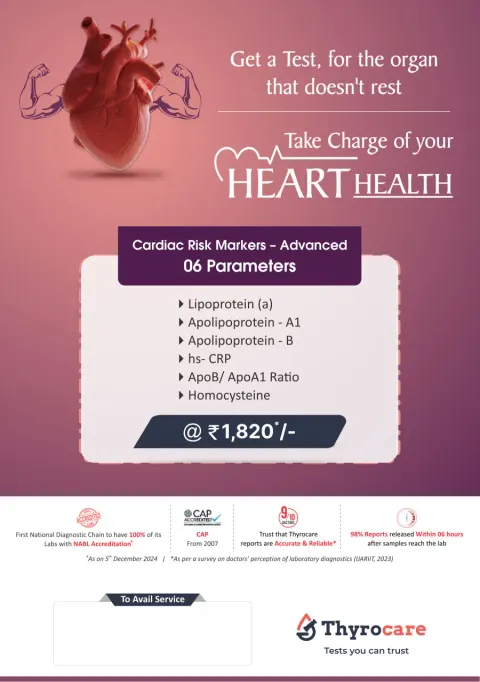
Cardiac Risk Markers - Advanced helps detect advanced markers of cardiac health, providing a detailed assessment of heart disease risk. If your customers have a history of cardiac issues or are experiencing symptoms like chest pain or fatigue, promote this profile. Advanced heart checkup is also recommended for those with risk factors like high blood pressure or diabetes. With the help of this test, one can also monitor their heart health and take steps to reduce the risk of heart disease. No fasting needed.
CARDIAC RISK MARKERS 6HOMOCYSTEINEHIGH SENSITIVITY C-REACTIVE PROTEIN (HS-CRP)Lipoprotein (a) [Lp(a)]APO B / APO A1 RATIO (APO B/A1)APOLIPOPROTEIN - A1 (APO-A1)APOLIPOPROTEIN - B (APO-B)
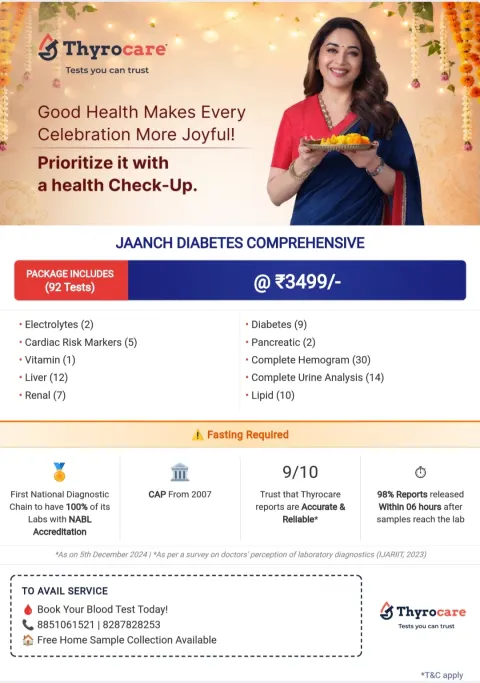
Diabetes Profile (2): HbA1c, Average Blood Glucose (ABG)
Fasting Blood Sugar (Glucose)
+ 13 more
₹5,670₹3,49938% OFF
You save ₹2,171
Jaanch Diabetes Comprehensive is designed to provide a complete assessment of blood sugar control and diabetes-related health risks. It includes an extensive Diabetes Profile, Cardiac Risk Markers, Pancreatic Health Tests, Vitamin Assessment, Lipid Profile, Liver Profile, Renal Profile, Serum Electrolytes, Complete Urine Analysis and Complete Hemogram (CBC) to evaluate key aspects of metabolic and overall health. This package helps monitor blood sugar levels, assess heart and pancreatic health, detect early complications affecting the kidneys and liver, identify nutritional deficiencies, and support effective diabetes management. Ideal for individuals with diabetes or prediabetes, those with a family history of diabetes, overweight individuals and people with a sedentary lifestyle.
CARDIAC RISK MARKERS 5APO B / APO A1 RATIO (APO B/A1)APOLIPOPROTEIN - A1 (APO-A1)APOLIPOPROTEIN - B (APO-B)HIGH SENSITIVITY C-REACTIVE PROTEIN (HS-CRP)Lipoprotein (a) [Lp(a)]
COMPLETE HEMOGRAM 28BASOPHILS - ABSOLUTE COUNTEOSINOPHILS - ABSOLUTE COUNTLYMPHOCYTES - ABSOLUTE COUNTMONOCYTES - ABSOLUTE COUNTNEUTROPHILS - ABSOLUTE COUNTBASOPHILSEOSINOPHILSHEMOGLOBINIMMATURE GRANULOCYTES(IG)IMMATURE GRANULOCYTE PERCENTAGE(IG%)TOTAL LEUCOCYTES COUNT (WBC)LYMPHOCYTEMEAN CORPUSCULAR HEMOGLOBIN(MCH)MEAN CORP.HEMO.CONC(MCHC)MEAN CORPUSCULAR VOLUME(MCV)MONOCYTESMEAN PLATELET VOLUME(MPV)NEUTROPHILSNUCLEATED RED BLOOD CELLSNUCLEATED RED BLOOD CELLS %PLATELETCRIT(PCT)HEMATOCRIT(PCV)PLATELET DISTRIBUTION WIDTH(PDW)PLATELET TO LARGE CELL RATIO(PLCR)PLATELET COUNTTOTAL RBCRED CELL DISTRIBUTION WIDTH (RDW-CV)RED CELL DISTRIBUTION WIDTH - SD(RDW-SD)
Jaanch Heart Comprehensive is an advanced screening package designed to provide a thorough evaluation of your cardiovascular health and overall wellness. It combines specialized Cardiac Risk Markers, Troponin I, NT-proBNP, CPK, Lipid Profile, Diabetes Screening, Liver Profile, Kidney Profile, Serum Electrolytes and Complete Blood Count (CBC) to assess multiple factors that influence heart function and cardiovascular risk. This package helps identify early warning signs of heart disease, monitor cholesterol and blood sugar levels, evaluate vital organ health and support timely preventive care. Ideal for individuals above 30 years of age, those with a family history of heart disease, hypertension, obesity, or anyone looking to proactively monitor their heart health.
CARDIAC RISK MARKERS 7APO B / APO A1 RATIO (APO B/A1)APOLIPOPROTEIN - A1 (APO-A1)APOLIPOPROTEIN - B (APO-B)HOMOCYSTEINEHIGH SENSITIVITY C-REACTIVE PROTEIN (HS-CRP)Lipoprotein (a) [Lp(a)]LP-PLA2
COMPLETE HEMOGRAM 28BASOPHILS - ABSOLUTE COUNTEOSINOPHILS - ABSOLUTE COUNTLYMPHOCYTES - ABSOLUTE COUNTMONOCYTES - ABSOLUTE COUNTNEUTROPHILS - ABSOLUTE COUNTBASOPHILSEOSINOPHILSHEMOGLOBINIMMATURE GRANULOCYTES(IG)IMMATURE GRANULOCYTE PERCENTAGE(IG%)TOTAL LEUCOCYTES COUNT (WBC)LYMPHOCYTEMEAN CORPUSCULAR HEMOGLOBIN(MCH)MEAN CORP.HEMO.CONC(MCHC)MEAN CORPUSCULAR VOLUME(MCV)MONOCYTESMEAN PLATELET VOLUME(MPV)NEUTROPHILSNUCLEATED RED BLOOD CELLSNUCLEATED RED BLOOD CELLS %PLATELETCRIT(PCT)HEMATOCRIT(PCV)PLATELET DISTRIBUTION WIDTH(PDW)PLATELET TO LARGE CELL RATIO(PLCR)PLATELET COUNTTOTAL RBCRED CELL DISTRIBUTION WIDTH (RDW-CV)RED CELL DISTRIBUTION WIDTH - SD(RDW-SD)
Jaanch Heart Screening is a comprehensive cardiac health package designed to assess your risk of developing heart disease. It includes advanced Cardiac Risk Markers along with an extended Lipid Profile that evaluates cholesterol levels, triglycerides, and key heart health ratios. This screening helps identify hidden cardiovascular risks, monitor cholesterol-related abnormalities and support early preventive care. Ideal for individuals above 30 years of age, those with a family history of heart disease, hypertension, obesity, or anyone looking to proactively monitor their heart health.
CARDIAC RISK MARKERS 6APO B / APO A1 RATIO (APO B/A1)APOLIPOPROTEIN - A1 (APO-A1)APOLIPOPROTEIN - B (APO-B)HOMOCYSTEINEHIGH SENSITIVITY C-REACTIVE PROTEIN (HS-CRP)Lipoprotein (a) [Lp(a)]