Prolactin normal range: what your hormone report means
Prolactin is a hormone made by the pituitary gland, a small gland at the base of the brain. Its main job is to help the breasts make milk after childbirth, so levels are naturally high in pregnancy and breastfeeding. Outside of that, a high prolactin can upset periods and fertility in women and lower sex drive in men. People often get it checked for irregular or missed periods, trouble getting pregnant, milky discharge from the breasts, low libido or headaches. Stress, poor sleep and some medicines can also raise it.
Mildly raisedOften stress, sleep or medicines; repeat may help
Up to about 2 times the upper limit
Ranges differ a little from lab to lab.
What does my result mean?
Prolactin Prolactin 30 ng/mL
This is mildly high. Stress, poor sleep, the time of sampling or some medicines can cause this, so your doctor may repeat the test before deciding anything.
Prolactin Prolactin 50 ng/mL
This is clearly above the usual range. Your doctor will look at your medicines, thyroid test and symptoms, and may advise further checks.
Prolactin Prolactin 100 ng/mL
This is high and should be reviewed by a doctor soon. They may check for a small pituitary growth, which is usually not cancer and is often treatable.
What this test checks
The test measures prolactin in the blood in ng/mL. It is advised for women with irregular periods, infertility or breast discharge, men with low sex drive or erection problems, and people with headaches or vision changes that a doctor wants to check. It is also used to follow up people with a known prolactin problem. Your doctor will tell you how often to repeat it.
Common reasons for a high value
Pregnancy or breastfeeding
Stress, poor sleep, hard exercise or nipple stimulation before the test
Some medicines, such as some used for acidity, nausea, mental health or blood pressure
Underactive thyroid
A small, usually non-cancerous pituitary growth (prolactinoma)
Kidney or liver disease
How to prepare
Give the sample in the morning, about 2–3 hours after waking up, after resting quietly for 15–30 minutes. Avoid hard exercise, stress and breast or nipple stimulation before the test. Fasting is usually not needed. Tell your doctor about all medicines you take, but do not stop them on your own.
When to see a doctor
See a doctor if your prolactin is above the range on your report, or if you have missed periods, milky breast discharge when not breastfeeding, trouble getting pregnant or low sex drive. See a doctor quickly if you have severe headaches, vision problems or loss of side vision.
Prolactin – FAQs
What is the normal prolactin level?
In women who are not pregnant it is about 4.8–23.3 ng/mL, and in men about 4.0–15.2 ng/mL. It is much higher in pregnancy and breastfeeding. The range printed on your own report is the one that applies.
Can stress increase prolactin?
Yes. Stress, poor sleep, hard exercise and even the stress of a blood draw can raise prolactin a little. That is why a mildly high result is often repeated, after rest and in the morning, before any decision.
Does high prolactin affect pregnancy?
High prolactin can disturb ovulation and periods, which can make it harder to conceive. Your gynaecologist will look for the cause and decide what is needed; many causes are easily managed.
How is the prolactin test done at home?
Book a morning slot. A trained person collects the blood sample at your home after you have rested. It is tested at a partner lab and the report is sent on WhatsApp and email.
This page is general information, not medical advice. The normal range printed on your own report is the one that applies, and only a doctor can tell what your result means for you.
Jaanch Female Hormone Screening is a targeted hormonal assessment with 7 parameters, designed to evaluate hormones that regulate menstrual health, thyroid function and endocrine balance. It measures key reproductive and metabolic hormones, helping identify hormonal imbalances associated with menstrual irregularities, PCOS and other endocrine disorders. Ideal for women presenting with symptoms suggestive of hormone imbalance, providing clinically relevant insights for endocrine evaluation. No fasting needed.
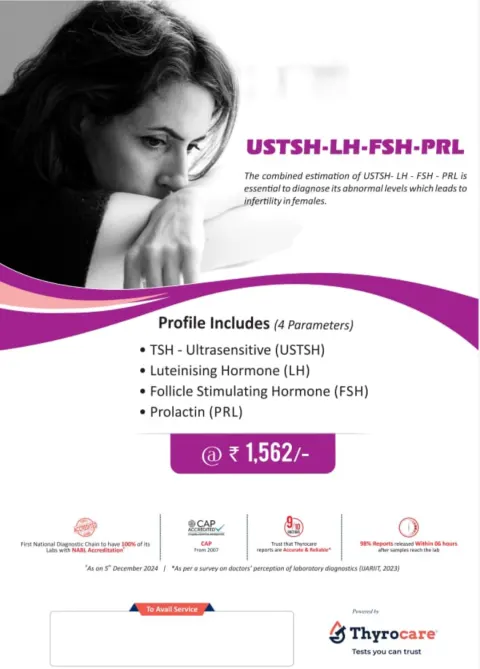
USTSH-LH-FSH-PRL helps detect the levels of hormones affecting the thyroid and reproductive organs. If your customers are facing reproductive health issues or thyroid problems, promote this profile. Hormonal checkup is also recommended for evaluating infertility or menstrual irregularities. With the help of this test, one can also balance hormone levels and improve overall health.