Fasting blood sugar normal range and what your result means
Fasting blood sugar (FBS) is the amount of glucose in your blood after not eating for at least 8 hours, usually checked first thing in the morning. It is one of the most common blood tests in India because it helps find prediabetes and diabetes early, often before any symptoms appear. It is also used to follow sugar control in people who already have diabetes. The test is quick and needs only a small blood sample.
DiabetesDoctor confirms with a repeat or other test
126 mg/dL or above
Ranges differ a little from lab to lab.
What does my result mean?
Fasting Blood Sugar 95 mg/dL
This is within the normal fasting range. Keep up healthy habits and recheck as your doctor advises.
Fasting Blood Sugar 110 mg/dL
This is in the prediabetes range. It is not diabetes, but your doctor may suggest HbA1c and lifestyle changes.
Fasting Blood Sugar 130 mg/dL
This is above the cut-off for diabetes. A single reading is not enough; your doctor will usually repeat the test or check HbA1c before deciding.
What this test checks
The test measures glucose, the main sugar your body uses for energy, after an overnight fast. Adults over 30, and anyone with extra weight, a family history of diabetes, high blood pressure or past high sugar in pregnancy, are often advised to check it. Many people test once a year; people with diabetes test as often as their doctor advises.
Common reasons for a high value
Prediabetes or diabetes
Eating or drinking something other than water during the fast
Stress, infection or a recent illness
Some medicines, such as steroids
Poor sleep, extra weight and very little activity
Early-morning hormone rise (dawn effect) in some people
Common reasons for a low value
Fasting much longer than 12–14 hours
Diabetes medicines or insulin, especially with a missed meal
Heavy alcohol use
Delay between sample collection and testing in the lab
Rarely, liver, hormone or other medical conditions
How to prepare
Do not eat or drink anything except plain water for 8–12 hours before the test; an overnight fast with a morning sample works best. Do not stop any regular medicine on your own – ask your doctor what to do on test day.
When to see a doctor
See a doctor if your fasting sugar is 100 mg/dL or above, or if you have heavy thirst, frequent urination, blurred vision or weight loss without trying. Very low sugar with sweating, confusion or fainting, or very high sugar with vomiting, drowsiness or fast breathing, needs urgent medical help.
How many hours should I fast for a fasting sugar test?
Fast for 8–12 hours, usually overnight, and give the sample in the morning. Plain water is allowed. Avoid tea, coffee, milk, juice and chewing gum during the fast.
Is fasting sugar 105 normal?
A fasting sugar of 105 mg/dL is slightly above normal and falls in the prediabetes range (100–125). It is a good time to talk to your doctor about diet, activity and an HbA1c test.
Why is my fasting sugar higher than my after-meal sugar sometimes?
This can happen because of early-morning hormones, a late dinner, poor sleep or the timing of medicines. Share both readings with your doctor, who can explain your pattern.
Can I give the fasting sample at home?
Yes. A phlebotomist comes to your home early in the morning to collect the sample. It is tested at a Thyrocare partner lab and the report comes on WhatsApp and email.
This page is general information, not medical advice. The normal range printed on your own report is the one that applies, and only a doctor can tell what your result means for you.
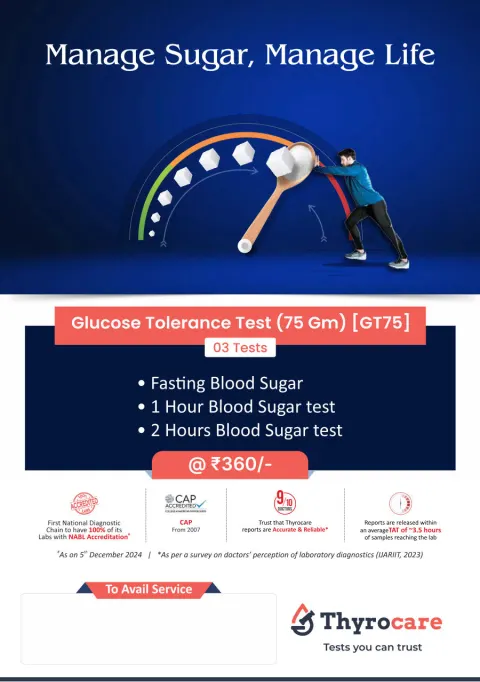
Glucose Tolerance Test (75 GM) is used to assess how effectively the body processes glucose (sugar) over time. The test measures Fasting Blood Sugar (Glucose), 1-Hour Glucose Tolerance, and 2-Hour Glucose Tolerance levels after consuming a 75-gram glucose solution. It helps diagnose conditions such as prediabetes, diabetes, and gestational diabetes, while providing insights into the body's insulin response and glucose metabolism. 10–12 hours fasting needed.
DIABETES 3FASTING BLOOD SUGAR(GLUCOSE)GLUCOSE TOLERANCE TEST (1 HOUR)GLUCOSE TOLERANCE TEST (2 HOUR)
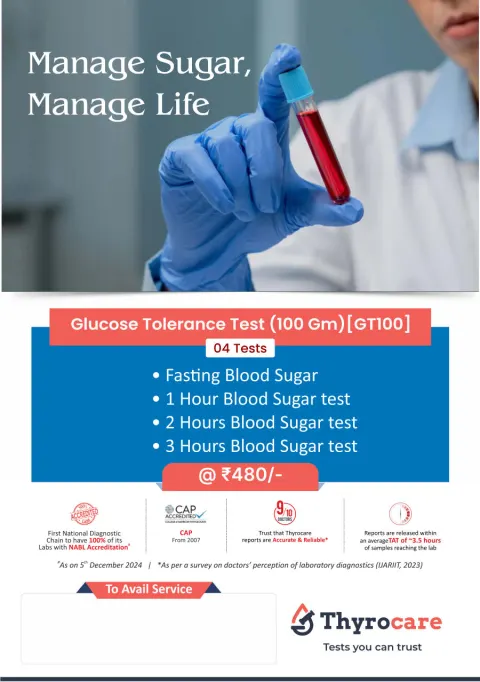
A glucose tolerance test is used to measure how the body is processing sugar. It primarily helps to diagnose diabetes or gestational diabetes (a condition seen in pregnant women). 10–12 hours fasting needed.
DIABETES 4FASTING BLOOD SUGAR(GLUCOSE)GLUCOSE TOLERANCE TEST (1 HOUR)GLUCOSE TOLERANCE TEST (2 HOUR)GLUCOSE TOLERANCE TEST (3 HOUR)
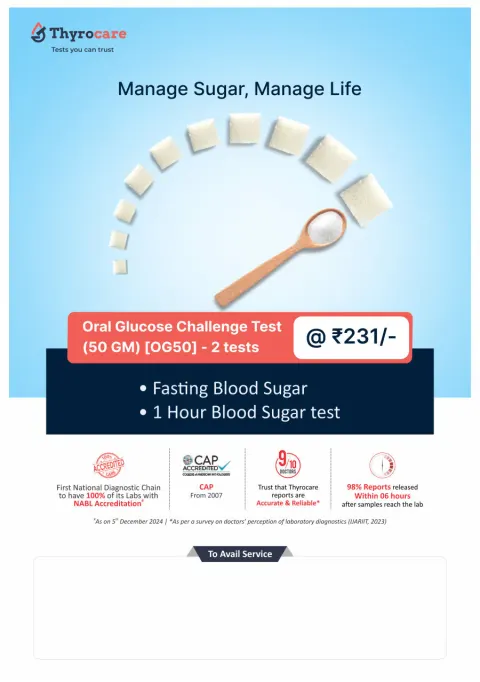
Oral Glucose Challenge Test helps detect gestational diabetes in pregnant women. Glucose challenge checkup is also recommended as part of routine prenatal care. With the help of this test, one can also identify glucose intolerance early and manage it effectively during pregnancy. 10–12 hours fasting needed.
DIABETES 2FASTING BLOOD SUGAR(GLUCOSE)GLUCOSE TOLERANCE TEST (1 HOUR)
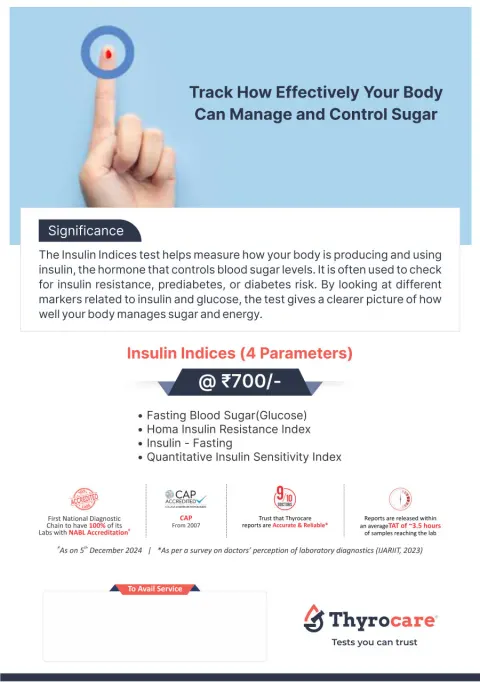
The Insulin Indices test helps measure how your body is producing and using insulin, the hormone that controls blood sugar levels. It is often used to check for insulin resistance, prediabetes, or diabetes risk. By looking at different markers related to insulin and glucose, the test gives a clearer picture of how well your body manages sugar and energy. 10–12 hours fasting needed.