HbA1c normal range: what your 3-month sugar average means
HbA1c is a simple blood test that shows your average blood sugar over the last 2–3 months. Sugar in the blood sticks to haemoglobin in red blood cells, and the test measures how much of it is coated with sugar. Unlike a single sugar reading, it is not affected much by what you ate yesterday. Doctors use it to check for prediabetes and diabetes and to see how well sugar is controlled in people who already have diabetes. It needs no fasting.
DiabetesDoctor usually confirms with a repeat test
6.5% or above
Common target in diabetesYour doctor sets your personal target
Around 7% or below
Ranges differ a little from lab to lab.
What does my result mean?
HbA1c 5.8%
This falls in the prediabetes range, just above normal. It is a useful early warning; discuss diet, activity and a repeat test with your doctor.
HbA1c 6.2%
This is in the prediabetes range. It does not mean diabetes, but the risk is higher, so ask your doctor about next steps and when to recheck.
HbA1c 7%
This is above the cut-off for diabetes. Only a doctor can confirm diabetes, usually with a repeat test or another sugar test, and plan care.
What this test checks
HbA1c measures the percentage of haemoglobin that has sugar attached to it. Adults with a family history of diabetes, extra weight, high blood pressure or past high sugar in pregnancy are often advised to check it. People with diabetes usually test every 3–6 months, as advised by their doctor. Others may check it once a year or as the doctor suggests.
Common reasons for a high value
Prediabetes or diabetes
Diabetes that is not well controlled
Extra body weight and very little physical activity
Iron deficiency anaemia can give a falsely high reading
Some medicines, such as long-term steroids, can raise sugar
Common reasons for a low value
Healthy sugar levels (low-normal is usually fine)
Recent heavy blood loss or a blood transfusion
Conditions where red cells break down faster, such as haemolysis
Some haemoglobin variants, like thalassaemia, can affect the result
Frequent low sugar episodes in people on diabetes medicines
How to prepare
HbA1c needs no fasting – you can give the sample at any time of day. If your package also includes fasting sugar or a lipid profile, fast 10–12 hours overnight (plain water is fine).
When to see a doctor
See a doctor if your HbA1c is 5.7% or above, or if you have heavy thirst, frequent urination, weight loss without trying or slow-healing wounds. People with diabetes should share every report with their doctor. Confusion, drowsiness, vomiting or fast breathing in someone with very high sugar needs urgent hospital care.
No. HbA1c shows your average sugar over about 3 months, so a meal before the test does not change it much. You can give the sample at any time of day.
Is HbA1c 6% normal?
An HbA1c of 6% is in the prediabetes range (5.7–6.4%). It is not diabetes, but it is a sign to improve diet and activity. Your doctor will tell you when to repeat the test.
Can HbA1c be wrong?
It is a reliable test, but anaemia, recent blood loss, a transfusion or some haemoglobin variants such as thalassaemia can affect it. Your doctor may then use fasting or post-meal sugar tests along with it.
How is the HbA1c sample collected?
A trained phlebotomist collects a small blood sample at your home. It is tested at a Thyrocare partner lab and the report is sent to you on WhatsApp and email.
This page is general information, not medical advice. The normal range printed on your own report is the one that applies, and only a doctor can tell what your result means for you.
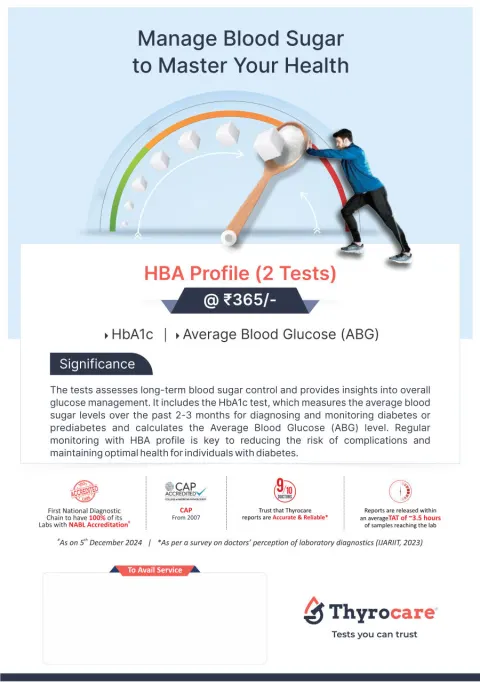
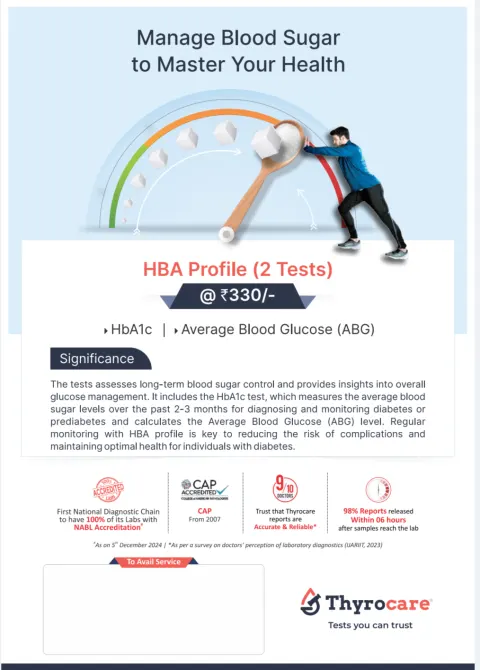
HBA Profile assesses long-term blood sugar levels and helps with glucose management. It includes Hemoglobin A1c (HbA1c) test, which measures the average blood sugar levels over the past 2-3 months for diagnosing and monitoring diabetes or prediabetes and calculates the Average Blood Glucose (ABG) level. The profile helps patients monitor diabetes and effectively evaluate treatment. No fasting needed.
HbA1c test, also known as glycated hemoglobin test, measures average blood glucose levels. It provides an overview of long-term blood sugar control, essential for diagnosing and managing diabetes. Regular monitoring of HbA1c levels is key to reducing the risk of complications and maintaining optimal health for individuals with diabetes.
Diabetes Profile (2): HbA1c, Average Blood Glucose (ABG)
Fasting Blood Sugar (Glucose)
+ 13 more
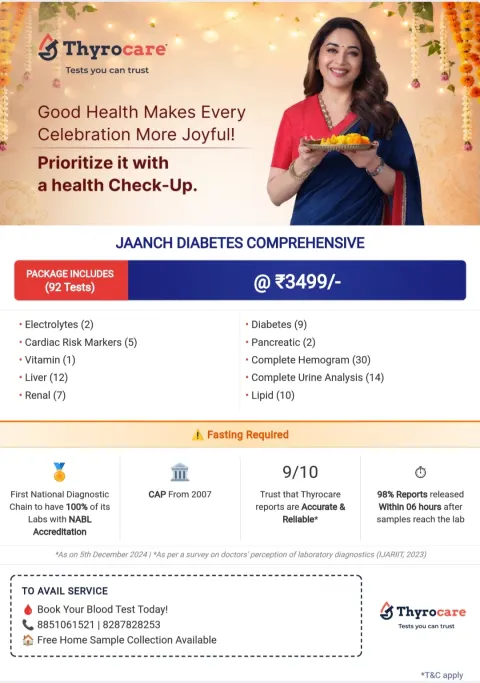
₹5,670₹3,49938% OFF
You save ₹2,171
Jaanch Diabetes Comprehensive is designed to provide a complete assessment of blood sugar control and diabetes-related health risks. It includes an extensive Diabetes Profile, Cardiac Risk Markers, Pancreatic Health Tests, Vitamin Assessment, Lipid Profile, Liver Profile, Renal Profile, Serum Electrolytes, Complete Urine Analysis and Complete Hemogram (CBC) to evaluate key aspects of metabolic and overall health. This package helps monitor blood sugar levels, assess heart and pancreatic health, detect early complications affecting the kidneys and liver, identify nutritional deficiencies, and support effective diabetes management. Ideal for individuals with diabetes or prediabetes, those with a family history of diabetes, overweight individuals and people with a sedentary lifestyle.
CARDIAC RISK MARKERS 5APO B / APO A1 RATIO (APO B/A1)APOLIPOPROTEIN - A1 (APO-A1)APOLIPOPROTEIN - B (APO-B)HIGH SENSITIVITY C-REACTIVE PROTEIN (HS-CRP)Lipoprotein (a) [Lp(a)]
COMPLETE HEMOGRAM 28BASOPHILS - ABSOLUTE COUNTEOSINOPHILS - ABSOLUTE COUNTLYMPHOCYTES - ABSOLUTE COUNTMONOCYTES - ABSOLUTE COUNTNEUTROPHILS - ABSOLUTE COUNTBASOPHILSEOSINOPHILSHEMOGLOBINIMMATURE GRANULOCYTES(IG)IMMATURE GRANULOCYTE PERCENTAGE(IG%)TOTAL LEUCOCYTES COUNT (WBC)LYMPHOCYTEMEAN CORPUSCULAR HEMOGLOBIN(MCH)MEAN CORP.HEMO.CONC(MCHC)MEAN CORPUSCULAR VOLUME(MCV)MONOCYTESMEAN PLATELET VOLUME(MPV)NEUTROPHILSNUCLEATED RED BLOOD CELLSNUCLEATED RED BLOOD CELLS %PLATELETCRIT(PCT)HEMATOCRIT(PCV)PLATELET DISTRIBUTION WIDTH(PDW)PLATELET TO LARGE CELL RATIO(PLCR)PLATELET COUNTTOTAL RBCRED CELL DISTRIBUTION WIDTH (RDW-CV)RED CELL DISTRIBUTION WIDTH - SD(RDW-SD)
Jaanch Heart Comprehensive is an advanced screening package designed to provide a thorough evaluation of your cardiovascular health and overall wellness. It combines specialized Cardiac Risk Markers, Troponin I, NT-proBNP, CPK, Lipid Profile, Diabetes Screening, Liver Profile, Kidney Profile, Serum Electrolytes and Complete Blood Count (CBC) to assess multiple factors that influence heart function and cardiovascular risk. This package helps identify early warning signs of heart disease, monitor cholesterol and blood sugar levels, evaluate vital organ health and support timely preventive care. Ideal for individuals above 30 years of age, those with a family history of heart disease, hypertension, obesity, or anyone looking to proactively monitor their heart health.
CARDIAC RISK MARKERS 7APO B / APO A1 RATIO (APO B/A1)APOLIPOPROTEIN - A1 (APO-A1)APOLIPOPROTEIN - B (APO-B)HOMOCYSTEINEHIGH SENSITIVITY C-REACTIVE PROTEIN (HS-CRP)Lipoprotein (a) [Lp(a)]LP-PLA2
COMPLETE HEMOGRAM 28BASOPHILS - ABSOLUTE COUNTEOSINOPHILS - ABSOLUTE COUNTLYMPHOCYTES - ABSOLUTE COUNTMONOCYTES - ABSOLUTE COUNTNEUTROPHILS - ABSOLUTE COUNTBASOPHILSEOSINOPHILSHEMOGLOBINIMMATURE GRANULOCYTES(IG)IMMATURE GRANULOCYTE PERCENTAGE(IG%)TOTAL LEUCOCYTES COUNT (WBC)LYMPHOCYTEMEAN CORPUSCULAR HEMOGLOBIN(MCH)MEAN CORP.HEMO.CONC(MCHC)MEAN CORPUSCULAR VOLUME(MCV)MONOCYTESMEAN PLATELET VOLUME(MPV)NEUTROPHILSNUCLEATED RED BLOOD CELLSNUCLEATED RED BLOOD CELLS %PLATELETCRIT(PCT)HEMATOCRIT(PCV)PLATELET DISTRIBUTION WIDTH(PDW)PLATELET TO LARGE CELL RATIO(PLCR)PLATELET COUNTTOTAL RBCRED CELL DISTRIBUTION WIDTH (RDW-CV)RED CELL DISTRIBUTION WIDTH - SD(RDW-SD)